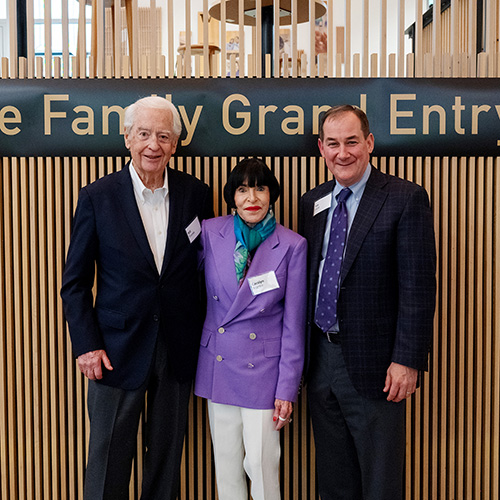
The Franke family’s gift will change the lives of about 30 medical students each year and, through them, thousands of patients across the WWAMI region. (L-R: Bill Franke, Carolyn Franke, Dr. Tim Dellit)
Bill and Carolyn Franke and their family believe education can open doors — not only for students but also the communities they go on to serve.
That belief led the family to make a historic $25 million investment in the UW School of Medicine’s Washington, Wyoming, Alaska, Montana and Idaho (WWAMI) program, helping more future physicians afford medical school and build careers serving rural, Indigenous and underserved communities.
The need is significant.
The five-state WWAMI region is big. Imagine driving across France, Germany, Spain, Italy and the United Kingdom combined. That’s how big. The region spans nearly 963,000 square miles — about 27% of the continental United States — yet is home to roughly 3.6% of the country’s population.
Providing healthcare across a region this vast is no small task. More than a third of the residents live in rural or medically underserved communities, often relying on a primary care physician or driving hours for specialized care. Now those communities are facing a growing physician shortage.
Why? An aging population, a wave of physician retirements and the rising cost of medical education are creating a perfect storm. Medical school costs can run well over $300,000, and new limits on federal borrowing may push students toward private loans that require a cosigner. For students from low-income, rural and Indigenous communities, they may not have someone to cosign.
It’s a big challenge. But it’s the kind of challenge the UW School of Medicine WWAMI program has decades of experience and strong regional partnerships to help address.
And with the Franke family’s investment, more students will have the support they need to be part of the solution.
WWAMI: A big idea
In densely populated parts of the country, building a physician workforce is relatively straightforward. There are more students, more hospitals and more places to train, often just miles apart.
But how do you educate enough physicians across a region this big? And how do you encourage them to practice in the rural and underserved communities that need them most?
These were the questions facing the UW School of Medicine in 1971. At that time, some Washington state counties had no primary care physicians. Alaska, Montana and Idaho faced similar shortages but had no medical schools of their own. Every state needed more doctors, but building a separate medical school in each one wasn’t realistic.
So the leaders at the School came up with an idea that was simple but ambitious: Train students where they’re most likely to build roots.
Instead of just one Seattle campus, the School partnered with universities, hospitals and clinics across the region. Students were able to begin their education closer to home and choose from a wide range of communities for their clinical rotations. Through state partnerships, students would pay lower in-state tuition, and they’d graduate with a UW School of Medicine degree.
Wyoming joined the program in 1996, completing the five-state partnership.
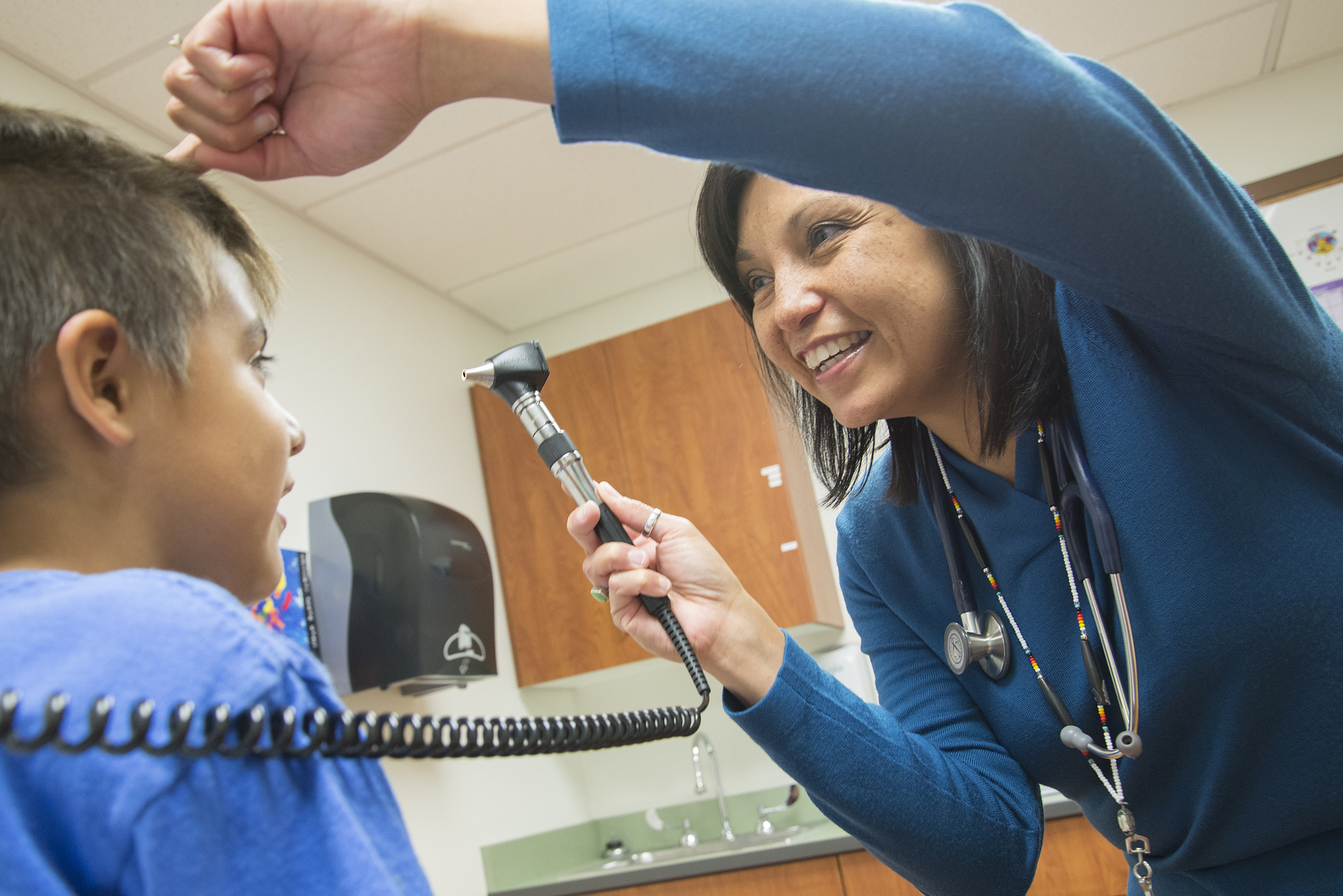
Today, WWAMI students train in rural clinics, American Indian and Alaska Native health centers, community hospitals, Veterans Affairs facilities and major medical centers. They receive experience in Seattle, but also in rural communities where a physician may serve patients spread across hundreds of miles with limited access to care.
The result: Nearly half of WWAMI students choose primary care, and graduates return to their states to practice medicine at rates nearly double the national median.
But the pressures the WWAMI program was created to address are growing once again.
Watch: WWAMI and the Franke Family’s Gift Impact
A commitment to a “hidden gem”
Bill and Carolyn Franke and their family approach philanthropy in a thoughtful and systematic manner. They look for strong leadership, measurable results, and opportunities where a single investment can have a deep impact across many lives, strengthen an organization for the long term, and contribute to lasting change.
Education has long been central to the family’s giving.
Bill grew up in rural Texas before spending part of his childhood in Paraguay, Argentina and Brazil, where his father worked in agricultural development. Those early experiences, together with the decades he and Carolyn have spent at their home near Bigfork, Montana, shaped his understanding that access to opportunity isn’t equal everywhere.
After earning undergraduate and law degrees from Stanford University, Bill built a successful business career, including co-founding Indigo Partners, a private equity firm that specializes in the air transportation industry. He’s long credited his education with opening doors throughout his life.
Over several years of conversations with the University of Washington, the Franke family found what they had been looking for in the School of Medicine’s WWAMI program.
WWAMI had accomplished something few medical school programs ever have. For more than 50 years, it coordinated universities, healthcare systems and communities across five states. It prepared physicians to care for rural, Indigenous and underserved communities while giving students from those same communities access to a world-class medical education closer to home.
“One of the things we loved about WWAMI is that it opens a door that students might not even realize is there,” Dave Franke says. “If you grow up in rural Montana or Alaska or Idaho, you may never imagine that a top-tier medical education is within reach. Then you meet a physician who came from a town like yours, and they’re saying, ‘You can do what I did.’ That’s incredibly powerful.”

“Having resources to turn to when something goes wrong provides a sense of support and relief that allows students to focus on becoming physicians,” says Dr. LeeAnna Muzquiz, vice dean for rural and regional affairs for the UW School of Medicine.
A path home
LeeAnna Muzquiz, MD, grew up on the Flathead Reservation in Montana. She excelled in math and science, but medicine didn’t feel like a realistic path.
That changed after her father died from a heart attack and stroke at age 44. Determined to make a difference, she attended a six-week UW School of Medicine program where she met other Native medical students. For the first time, she could see herself becoming a physician. Scholarships, mentors and a community of peers helped her continue.
She chose the WWAMI program because she could begin her education in Montana and train in communities like the one she hoped to serve. During medical school, she completed a rural experience in her hometown, clerkships across Montana and additional training throughout the WWAMI region.
After residency, she returned home.
Working for the Tribal Health Department, Muzquiz helped build two multidisciplinary clinics and several satellite clinics across the Flathead Reservation, expanding access to care for the community that had shaped her.
Today, as the vice dean for rural and regional affairs for the UW School of Medicine, she sees students eager to follow a similar path. Rural and Indigenous applicants often describe WWAMI as their dream school, only to choose another institution because the financial aid package is stronger. Others decide medical school isn’t financially possible at all.
The Franke gift is designed to change that. Scholarships will reduce student debt. Emergency funding will help students stay enrolled when life takes an unexpected turn. Recruitment and retention resources will help the school compete for students committed to rural and Indigenous health. Lower debt will also give students greater freedom to choose primary care and practice in the communities that need them most. And the new W.A. Franke Rural Medical Education Summit will bring together students, alumni and faculty from the 18 Big Ten Conference institutions to share ideas and solutions.
“It’s very forward-thinking,” Muzquiz says. “The Franke family took the time to understand our students and what they need. It’s not just about paying tuition. Medical students are also people, and things happen in their lives that can derail them. Having resources to turn to when something goes wrong provides a sense of support and relief that allows students to focus on becoming physicians.”
A lasting investment
The Franke family’s gift will change the lives of about 30 medical students each year and, through them, thousands of patients across the WWAMI region. But across five states, the need extends far beyond what any one gift can meet.
Every year, the School attracts students with the talent, determination and desire to serve rural and Indigenous communities. For some, the difference between becoming a physician and leaving that dream behind is scholarship support, an emergency expense or the confidence that support will be there when they need it.
When a student leaves that path, the loss reaches beyond the individual. It may mean one less physician returning to a rural town, one less doctor serving an Indigenous community and one more community waiting longer for care.
The Frankes invested in WWAMI because they believe in its mission, its role as a national leader in rural medical education and the students it serves. Their gift is both an investment in those future physicians — and an invitation for others to join them.
“We think students are where you can have the most impact,” Dave says. “You help a medical student complete their education and begin a career, and they may spend 40 or 50 years caring for hundreds or even thousands of people. When you multiply that across every student, it becomes this huge amplifier effect.”
Written by Nicole Beattie