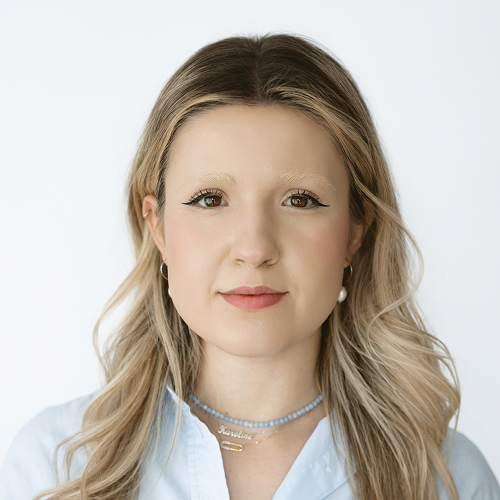
Carolina Pavlenco
I was born in Moldova, a small country in Eastern Europe that was part of the former Soviet Union. My parents decided to move to the U.S. when I was around five, and I grew up in Spokane, Washington, where most of my dad’s side of the family lives.
As a kid, I was really involved in soccer and volleyball. I think for children of immigrant parents, sometimes athletics become a way to bridge the gap between the values and culture you’re raised in and the country you’re growing up in. Sports helped me connect to my community.
Now I do a lot of long-distance running and strength training, and I love just being outside. Washington’s the perfect state for that. Even in medical school, I’ve found ways to keep that part of myself going — I ran a half-marathon during a rotation in Spokane, just three months after I started running seriously. I’ve taken up skiing, too, because my friends in medical school taught me.
That love of sports was one of the reasons I became interested in becoming a doctor, but my dad was also a huge inspiration. He was a medic in the Soviet military, and his stories about jumping out of an airplane with a parachute made a big impression on me when I was little.
How I would become a doctor, though, wasn’t as clear.
Small steps toward a big dream
After graduating from high school, I enrolled at Washington State University in Spokane. I decided to study nutrition and exercise physiology, and in my first year, I also started working at the YMCA as a group exercise instructor, mostly with active older adults. It was a great way to apply what I was learning in the classroom to real life.
Some of my professors were conducting research into topics such as exercise-induced asthma and the impact of supplements on cardio-metabolic health. I became involved and discovered I enjoyed collecting data and collaborating on everything that went into a research project. In my final year, I found an internship opportunity at Yale University’s strength and conditioning department, working with collegiate athletes. It was perfect.
Then COVID-19 hit.
We had to figure out a whole new way of conducting the work remotely. Because I had experience with research, any time we had a meeting, I would try to work research in. My director at the time didn’t exactly say I was nerdy, but that I “loved the scientific method,” and I should meet their orthopedic surgeon for team sports, Dr. Elizabeth Gardner. I knew it was a unique opportunity. When you look at practicing orthopedic surgeons across the country, only about 6% to 7% are female.
I told her about wanting to become a doctor but that I felt unsure. She encouraged me to go for it and said, “All you need is one school to believe in you.”
For me, that was the UW School of Medicine.
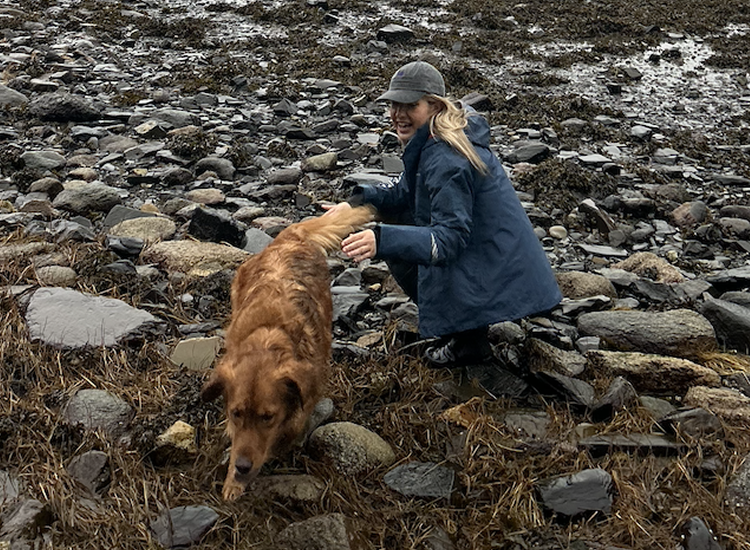
“One day, when I have the means, I want to support medical scholarships, too. Because building healthy communities isn’t something one person can do on their own. It takes a team.”
Finding my way — and giving back to others
After graduating from Washington State University, I worked at Kootenai Health in Coeur d’Alene, Idaho, to get more experience in healthcare while I tried to figure out the process of applying to medical school. I took the MCAT four times before I finally felt ready.
Even then, there was still so much I didn’t know. How many schools should you apply to? Who should you ask for a recommendation? How do you set up shadowing? I remember spending a lot of time on Reddit asking random strangers.
I knew the University of Washington School of Medicine had a fantastic program and that it trained incredible physicians. Plus, I could go to medical school in Spokane, and it was important for me to be close to family. I was so excited when I was accepted.
And it’s been such a great experience. During my first two years in Spokane, the faculty were really knowledgeable, and we’d also have lectures from Seattle. Now, in my fourth year, I’ve done rotations at Harborview Medical Center, but also at smaller clinics in Montana and Alaska. I even ran into a patient in the grocery store who remembered me from his hospital stay and told me he was doing better. That was super meaningful.
As a first-generation college student, it’s important to me to support others too. I’ve mentored through UW’s underrepresented in medicine programs, the American Medical Women’s Association and even informally with students from Gonzaga University. One of my mentees recently got into UW’s Spokane site, which was such a full-circle moment.